
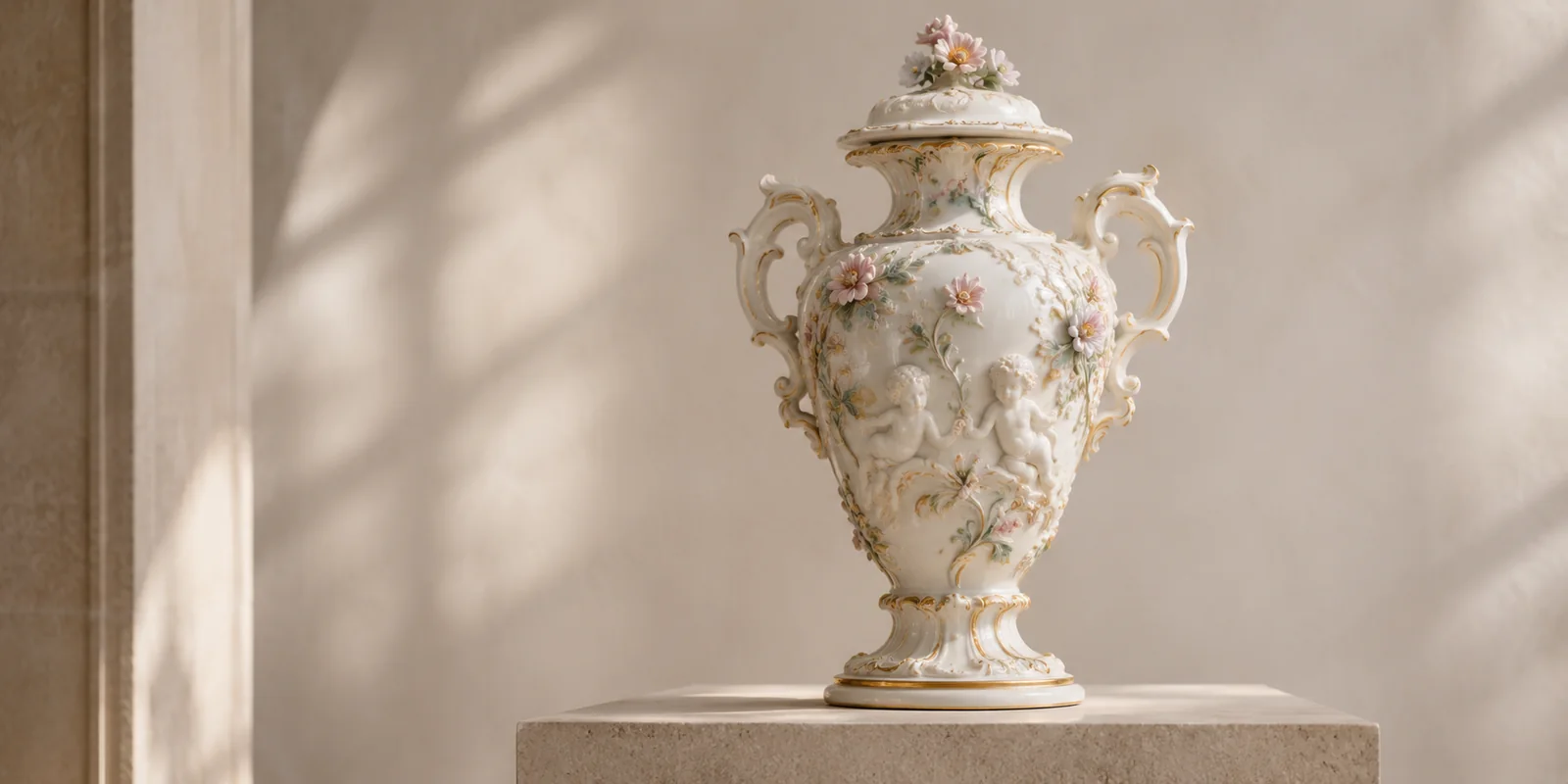
In 17th-century Europe, Chinese and Japanese porcelain was highly valued. It arrived through trade, while manufacturing hard-paste porcelain with similar characteristics remained a challenge for European producers. In the early 18th century, experiments in Saxony succeeded, and the Meissen factory was founded in 1710. It became possible to produce the material locally, and artisans began developing new forms and decorations that leveraged its properties. The Metropolitan Museum of Art
When porcelain production became possible in a new location, the scope for distinguishing between pieces expanded. It became possible to appreciate their shaping, decoration, and the difficulty of their execution, in addition to the material itself. This story helps us understand a broader transformation. The meaning of luxury changes when the things that are difficult to obtain, the skills we value, and the cues we learn to read change.
When Scarcity, Craftsmanship, and Status Converge
Meissen artisans created large vases that were difficult to fire successfully in porcelain kilns until they hardened. Among the pieces documented by the Metropolitan Museum are also parts of a porcelain set made by the Du Paquier factory in Vienna, presented by Emperor Charles VI as a gift to Empress Anna Ivanovna of Russia. The Metropolitan Museum of Art
In the vases, we see the value of a skill that is difficult to replicate. In the gift, we see how a meticulously crafted item acquires additional meaning due to who presents it and to whom it is presented. Craftsmanship and status can coexist in the same piece, and each explains an aspect of its value. Today, a collector might appreciate the artisan’s skill in a piece that its first owner cherished for its social significance.
When the Way Luxury is Displayed Changes
Imagine two watches. On the first, the maker’s name is clearly visible on the dial. The second watch, however, might indicate its maker through the shape of its hands or its finish, for those who recognize its designs. More people can read the first cue, while the second requires prior knowledge of what they are looking at.
In four studies on subtle cues in consumption, researchers Jonah Berger and Morgan Ward found that less obvious brands increase the likelihood of an observer misidentifying the product. They also found that individuals more knowledgeable in a specific field might prefer subtle cues due to their ability to interpret them and communicate with others who understand the field. Original study in the Journal of Consumer Research
The result helps us understand the difference between the value of an item and the ease of recognizing its status. A prominent logo might attract immediate attention, while appreciating a delicate finish requires time and expertise. In both cases, the item can serve a social function. What changes is what people see in it, and who can understand the cue.
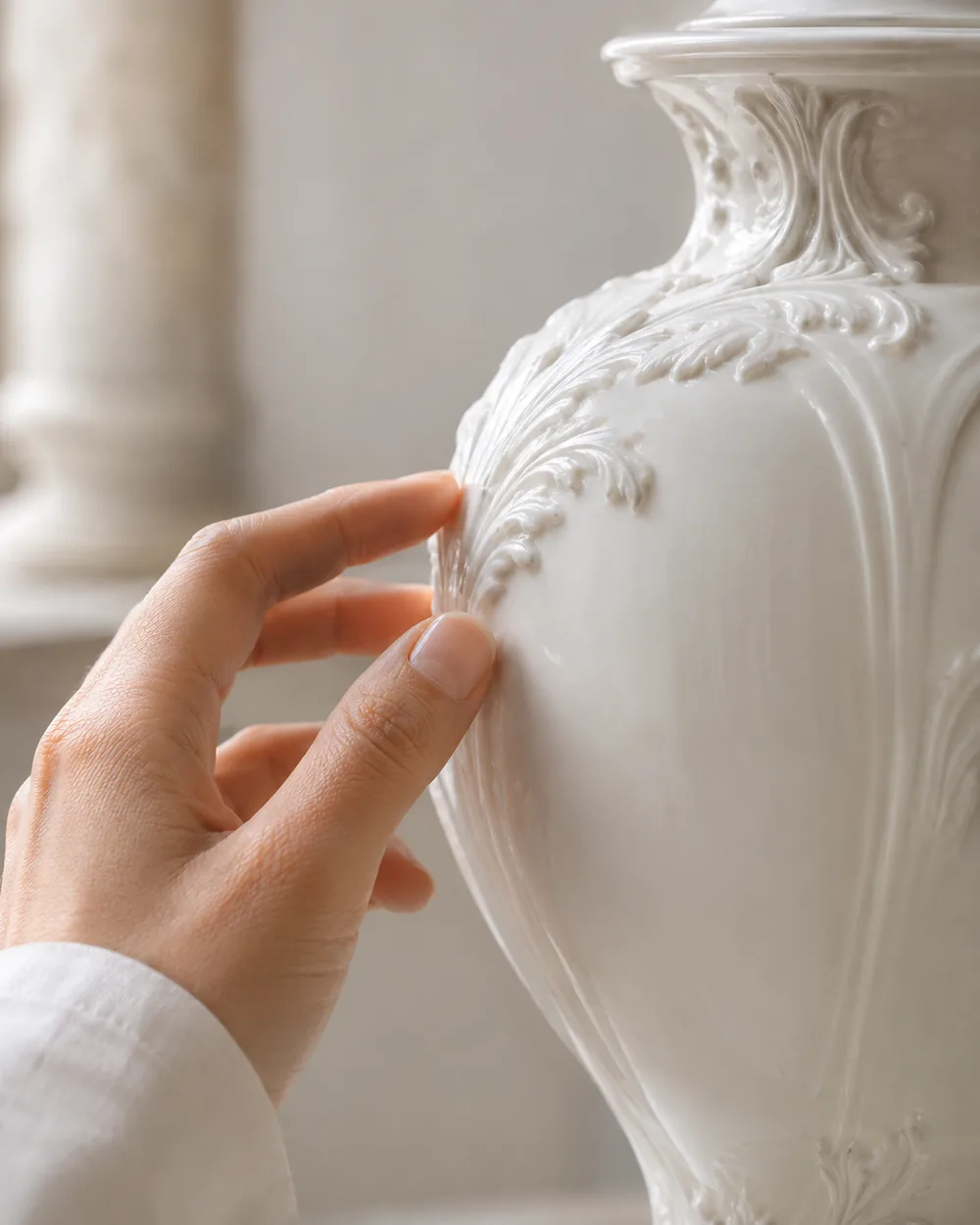
When Luxury is in What We Experience
We can admire a piece of porcelain after acquiring it, but the value of a hotel stay is formed during the stay itself. A guest might recall how they were welcomed, how service responded to a special request, or the amount of privacy the place afforded them. Jochen Wirtz and his colleagues, in their study on luxury services, suggest that the perception of service luxury is shaped by its actual characteristics and how the customer experiences it. Luxury Services Study

If we compare a piece of porcelain to a hotel stay, we find that the question of value changes with what we are trying to assess. For the piece, we can examine the material and craftsmanship. For the stay, we look at what the service provided and how we experienced it. Two visitors might appreciate the same experience differently, because what one seeks in a stay might differ from what matters to the other.
What Changes When Luxury Changes?
In porcelain, we see how the transfer of manufacturing knowledge differentiates one piece from another. In watches, we see how people’s knowledge determines what details they can interpret. In services, we see how the experience itself becomes the object of appreciation. These aspects can coexist at one time, and their importance can vary from person to person and from context to context.
Therefore, when we describe something as luxurious today, it’s useful to ask a more precise question. What exactly do I appreciate about it? Perhaps it’s craftsmanship I can observe, an experience I find valuable, or a meaning I carry from my knowledge of the item. And when I know what gives this choice its value to me, it becomes easier to decide if it’s worth it.
Read also What is Luxury, Really?


Leave a comment