
What is Quiet Luxury?
Imagine two coats, similar in color and cut. When you wear the first, you notice that its shoulders sit perfectly, and the lining allows you to move with ease. The second one looks appealing in pictures, but you have to pull the sleeve up every time you raise your arm. From a distance, the two coats might seem similar. During use, a difference emerges that you can describe and decide if it matters to you.
Quiet luxury in Nesh’s philosophy means choosing what deserves your appreciation for the quality and value you find in it. Simplicity helps you notice what makes a difference. You might see it in the cut of a coat, the texture of a surface you touch every day, or a service that respects your privacy. In every case, the same question remains: What do I appreciate here, and how do I know it’s worth my choice?
What Does It Mean for Luxury to Be Quiet?
A coat might seem quiet because its maker’s name isn’t prominently displayed. Yet, those familiar with the designer’s work might recognize it by the cut or a small detail in the buttons. This is a type of cue studied by consumer researchers. In four studies, Jonah Berger and Morgan Ward found that less obvious cues can be harder for the general public to read, and that those with greater domain knowledge can distinguish them and communicate them to others who also know the field. Studying Subtle Cues in Consumption
When someone recognizes the coat’s maker, they’ve read a cue. When you try it on and notice the ease of movement, you’ve found a feature that impacts you. Both might matter to you. Separating them helps you know what you’re paying for, especially if you liked a coat before trying it on just because you knew its name.
How Does Simplicity Help Us See Quality?
Imagine a wooden table with a simple design. Its form allows you to notice the proportion of its parts and how the top meets the legs. When you use it, you can observe if it’s stable and if its edge is comfortable when you rest your arm on it. These are details you can examine yourself.
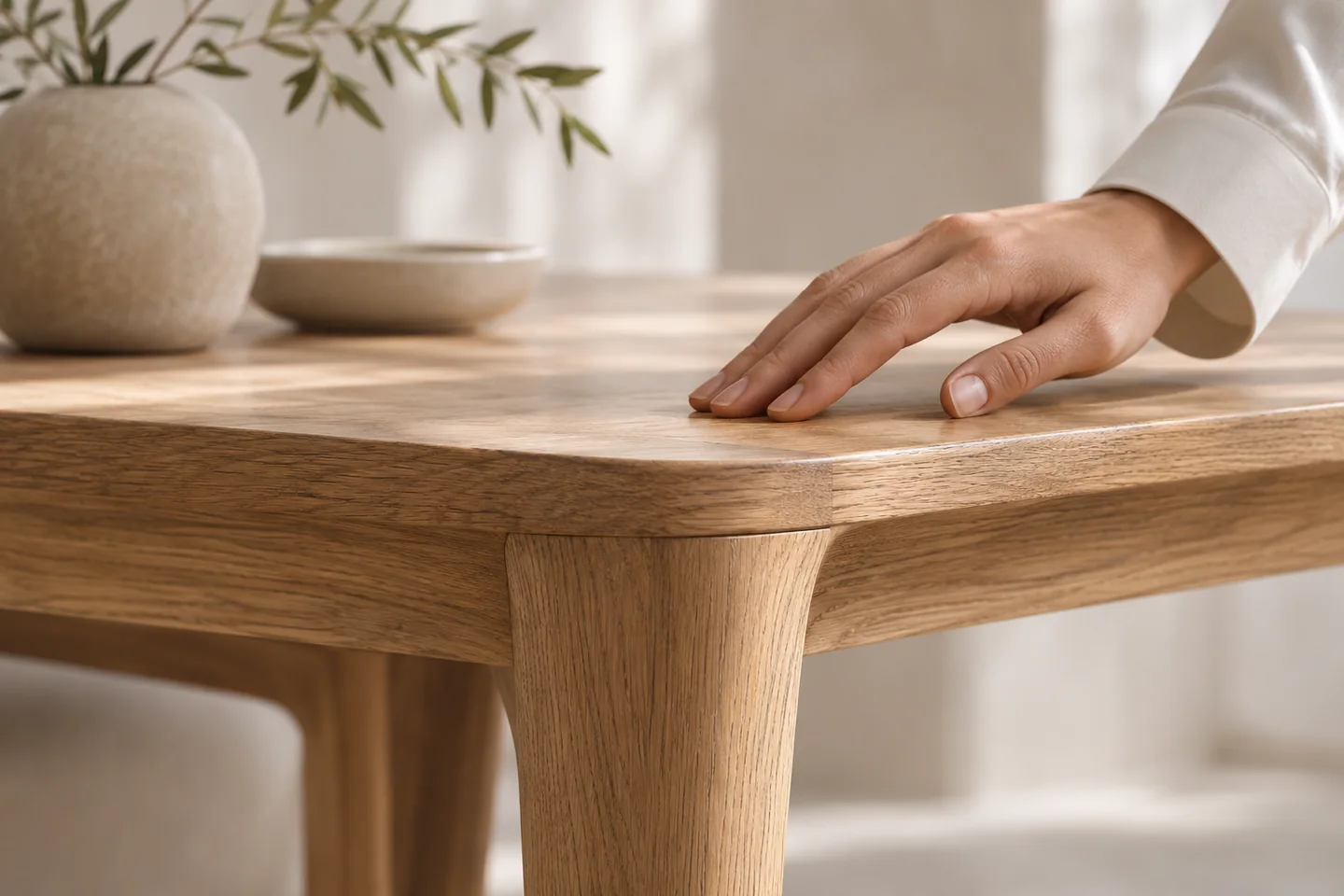
Here, simplicity serves a purpose. It allows you to pay attention to the impact of a design or manufacturing decision. You might find the same impact in an ornate piece, if the ornamentation is part of what you value in it. In a ceramic piece, for example, the precision of a botanical drawing might matter as much as the surface texture. For every detail, a question helps you appreciate it: What does it add to the piece, and what do I notice when I see it up close or use it?
How Does Quiet Luxury Appear in an Experience?
During a short stay, you might appreciate that the room allows you to sleep peacefully, that check-in procedures are easy, and that service is available when you need it. These are things you can notice even if they aren’t prominent in photos of the place. Jochen Wirtz and his colleagues suggest that service luxury is formed by its actual characteristics and the customer’s perception of them. What gives a stay value to one person might differ from what another person appreciates in it. Studying Luxury Services
If you’re choosing a place to rest after a long journey, isolation from noise might be more important to you than the spaciousness of the lobby. And if you’re hosting a meeting, it might matter to you that the space is set up for conversation and that service arrives on time. Understanding the purpose of the experience helps you know which details are worth looking for.
How Do I Know If a Choice Is Worth It?
Start with what you can describe. In a coat, that might be ease of movement. In a table, it might be stability or the feel of the edge. And in a stay, it might be peaceful sleep or privacy. Then ask yourself about the impact of this detail on your use. Will you appreciate it greatly? And is its impact enough to justify the price difference for you?
This way, you can explain why you chose something, even to those who see it as ordinary. You might also discover that what you liked most about it was present from the beginning, but you needed to experience it up close to truly know its value.
For previous reading in the “Start Here” path. What is Luxury, Really? · How Has the Meaning of Luxury Changed Over Time?

